Author Archives: A-Mezz

Bi-directional gates are not SAFETY gates

Safety gates can be confusing. Don’t let them be.

Safety gates can be confusing. Don’t let them be.

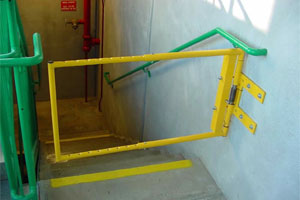
We often get calls from customers looking for bi-directional safety gates, i.e. gates that do not have a stop and swing both in and out. Often these customers are looking for gates for staircases to hang signage on in order to “restrict access” beyond certain floors in staircases. The problem is that these gates do not meet OSHA standards for fall protection. OSHA’s guard rail standard requires a top and mid rail and requires the gate to hold back a minimum of 200 lbs. of pressure at the top rail. By definition, bi-directional gates do not meet that requirement, especially when used at the top of stairs. The best option for these customers is to use a self-closing and self-stopping gate, similar to our AG series of gate.

Stair safety gate mounted with the orientation requiring user to pull the gate towards them to walk downstairs. Coming upstairs, the user would simply push through the gate.

Stair safety gate mounted with the orientation requiring user to pull the gate towards them to walk downstairs. Coming upstairs, the user would simply push through the gate.

When used at the top of stairs, these gates can be positioned to require anyone going down to a restricted area to pull the gate towards them and descend the steps. They can also be positioned at the bottom of the steps requiring anyone going up the steps to pull the gate toward them to ascend the steps.

What you cannot do, and what is not safe by any means, is to do the opposite. If you install a bi-directional gate at the top of a staircase and someone falls into it, odds are they are going to have a very bad injury.

Bi-directional gates are not fall protection. They can actually give a false sense of safety creating more accidents.

Bi-directional gates are not fall protection. They can actually give a false sense of safety creating more accidents.

So take the extra second and install the proper gate for your location. Being safe is a LOT cheaper than cutting corners.

Commercial and residential roof hatches for pitched roofs

economy series roof hatch mounted on a pitched roof

Standard roof hatch on a pitched roof

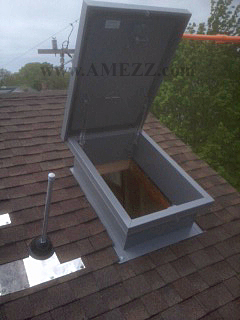
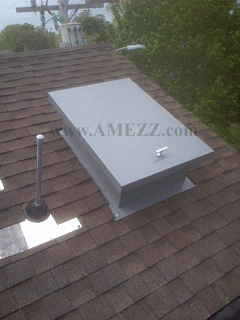
We received this set of photos from a customer who used our “off the shelf” Economy Series Galvanized Roof hatch on a pitched shingle roof like you would find in many commercial and residential locations. The standard roof hatch comes with cap flashing and 1” thick rigid fiber board insulation along the curb of the hatch. For this installation, the customer removed the curb insulation from the hatch and bolted the hatch down to the roof. They wanted the most economical roof hatch solution that had a low profile to match the roof slope. Ordinarily we would suggest using a pitch corrected roof hatch on slopes greater than 3/12, but the infrequent use and need for a low profile roof hatch was more important to the customer than the advantages of the pitch corrected roof hatch. Below are some pros and cons of each setup to help you decide which solution is best for your situation.

Open roof hatch showing clearances on a sloped roof

Open roof hatch showing clearances on a sloped roof

Economy series hatch installed on a shingled, sloped roof

Economy series hatch installed on a shingled, sloped roof


Standard roof hatch on a pitched roof pros:

  • Low cost
  • Standard sizes most likely in stock for immediate shipment
  • Low profile on roof

Standard roof hatch on a pitched roof cons:

  • Cannot use roof hatch railing (roof hatch railing may be required by OSHA depending on your site conditions)
  • Increased strain on hardware – installation on pitches 4/12 and greater are not covered by warranty
  • Decreased opening area due to roof hatch angle (see above photos)
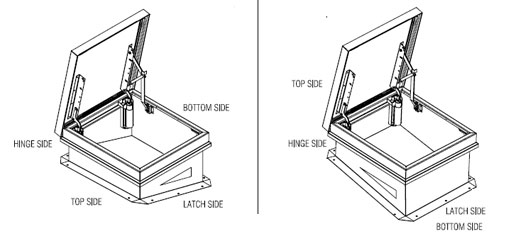
Sample pitch correction options for roof hatch curbs mounting on sloped roofs

Sample pitch correction options for roof hatch curbs mounting on sloped roofs

Pitch corrected hatch on a pitched roof pros:

  • Larger opening for exiting on a pitched roof
  • Less strain on the hardware
  • Roof hatch railing can be installed on pitch corrected curbs
  • Needed for warranty coverage on pitches of 4/12 and greater
  • Required for larger roof hatches on pitched roofs

Pitch corrected roof hatch on a pitched roof cons:

  • Slightly increased cost (made to order)
  • Increased lead time (made to order)
  • Taller curb on low end of roof may be more visible from ground level

Using the pitch corrected hatch for your pitched roofs over 3/12 gives you the standard manufacturer’s  warranty and can give you a larger opening to go through, but ultimately it comes down to your specific needs and what is most important for you. If you have any questions, please contact us.

How to properly paint galvanized metal staircases and railings

What is hot dipped galvanized metal and why do people use it?

Before we get into how to paint over galvanized metal, let’s give a really quick background into what hot dipped galvanizing is and why people would do it.
Stair parts being lowered into a bath of molten zinc

Stair parts being lowered into a bath of molten zinc

Hot dipped galvanizing is a process that involves dipping steel into a bath of molten zinc. This process creates a coating that is metallurgically bonded to the steel, in essence becoming the outer layer and part of the steel itself.
Stair components coming out of the zinc bath

Stair components coming out of the zinc bath

The galvanized coating adheres to the steel at around 3600 psi, where other coatings, like zinc rich painting and zinc plating, adhere to the steel at a rate of 300-600 psi at best. The hot dipped coating has a hardness of between 170-250 DPH (Diamond Pyramid Hardness) as compared to the soft non-abrasion resistant coating of zinc rich paint or a 75 DPH hardness of zinc plating.  This is important as it shows why hot dipped galvanizing is such a popular means of corrosion resistance as opposed to other coating options out there.

How do I paint over hot dipped galvanized steel?

If you are looking for a finish other than the shiny or dull galvanization finishes (there are cosmetic differences between each in luster, but no corrosion difference between the two), you would need to do a duplex, or two part, finish to your product:  a hot dipped galvanized base layer and a painted top layer.

In order to paint galvanized metal you will need to first know whether the steel is:

  • newly galvanized (under 48hrs exposed, no zinc compounds built up on outside of steel),
  • partially weathered (day 2 to one year, some zinc compounds built up on outside of steel as well as possible dirt, grease, dust, etc.)
  • fully weathered (one year on, zinc compounds covering the entire surface.)

If the galvanizing is new you will need to profile the surface to give the paint something to adhere to. You will also need to grind down any bumps or drips that may be present from the galvanizing process as these will show through the paint. REMEMBER: Take care not to grind away the entire galvanized coating; using a hand grinder may be best practice to control pressure and grinding depth. For a partially weathered galvanized surface you will also need to remove any drips or runs, as well as the built up zinc compounds on the surface. For fully weathered surfaces you can skip those steps as the built-up zinc compounds are good for helping the paint adhere.

After you have profiled and/or prepped the surface you will need to clean the oil, dirt and other compounds from the steel. You can wipe down the handrails using a product like “simple green” to ensure there is no oil or other buildup on the material. Then you will need to use clean water to rinse the surface and dry it. Dry time to paint time should be kept to a minimum (under 12 hrs.) in order to avoid allowing any other contamination or build-ups to occur.
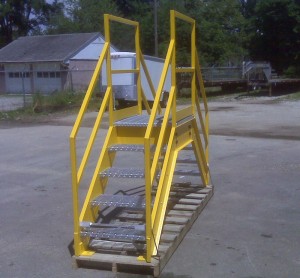
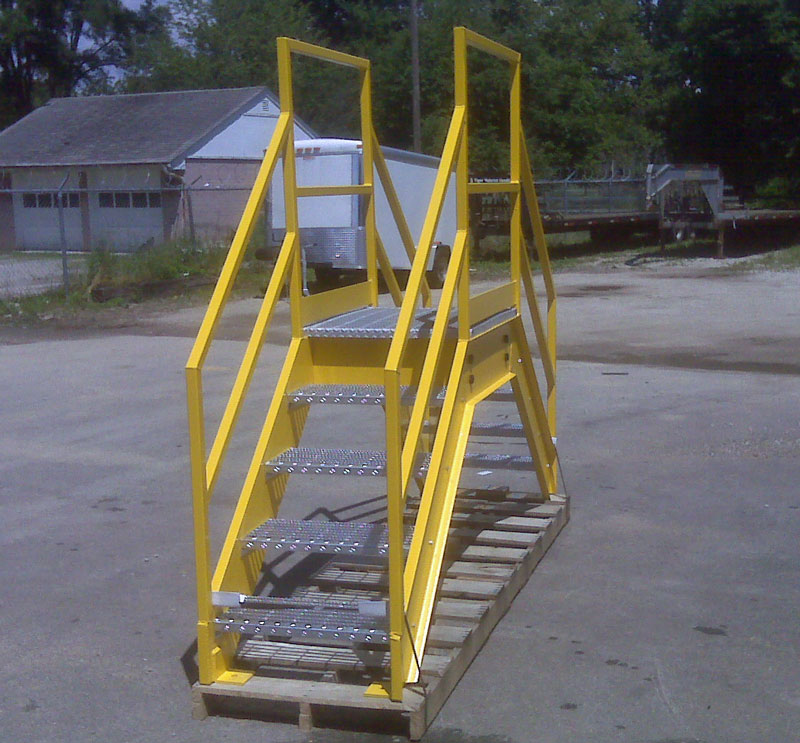
paint galvanized metal stair crossover

Stair crossover with yellow paint over galvanized steel handrails and stringers

What are some paints that are available for use over galvanized steel?

After the surface is clean and profiled you are ready to paint. A primer such as Sherwin Williams “pro-cryl” can be used. This primer dries fast and is corrosion resistant. You can top coat shortly after that with an acrylic coating paint like “DTM”. Check with your local paint supplier for additional options, as well as to get re-coat and cure times based on your temperature, humidity and paint thickness.

 

Outdoor Stairs for a Construction Trailer

How to get safe permanent access to a construction trailer

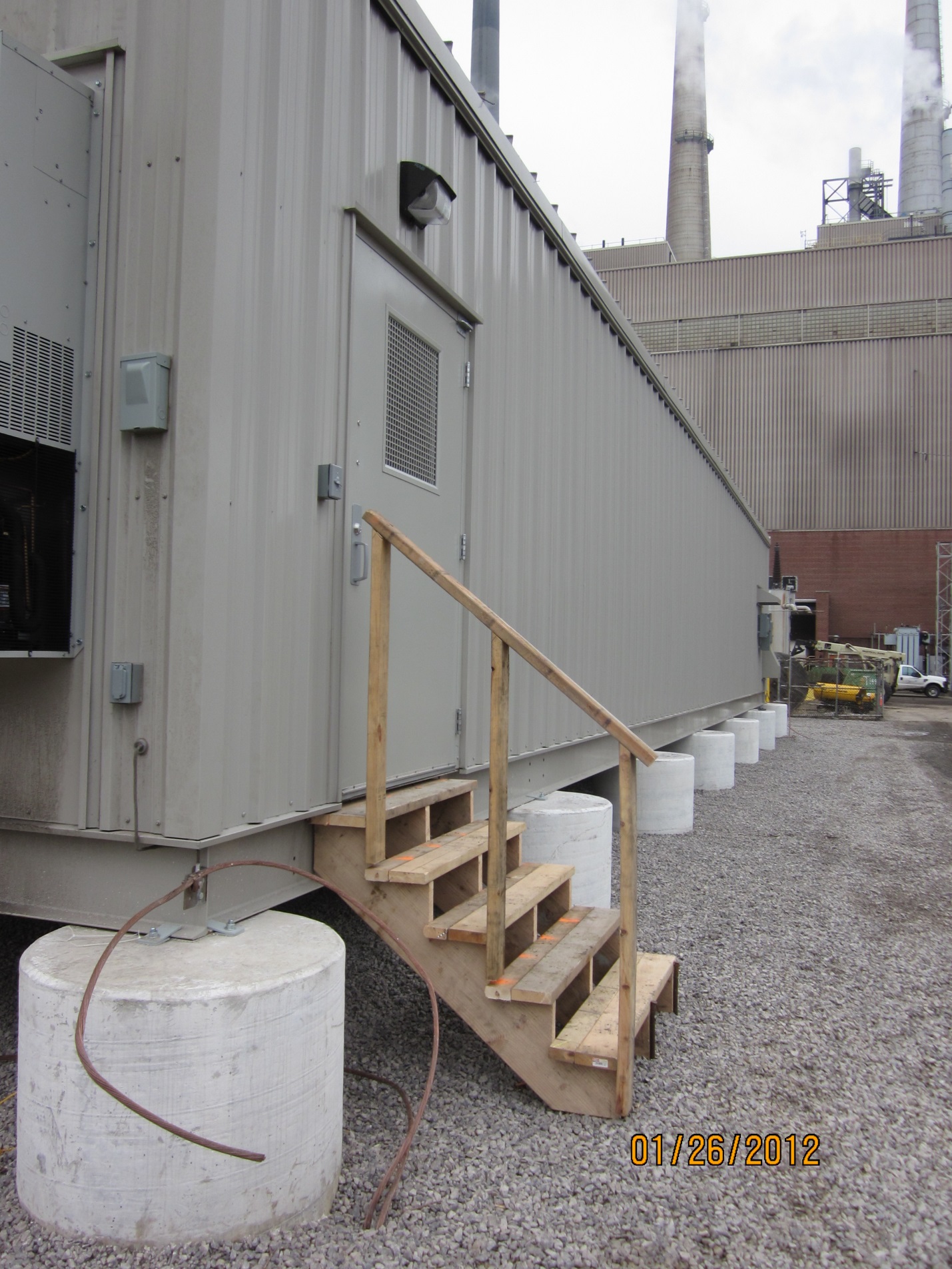
Wooden construction trailer stairs

Temporary wooden construction trailer stairs

Job site construction trailers are used all over. Some are temporarily placed in location and then relocated, and some are permanently stationed. The construction trailers can house offices, tools, machinery, electrical controls and more. Oftentimes, job site trailers will have temporary wooden stairs affixed, like the above photo. But what do you do when the construction trailer is actually in a permanent or semi-permanent location?

assembled metal stairs for construction trailer

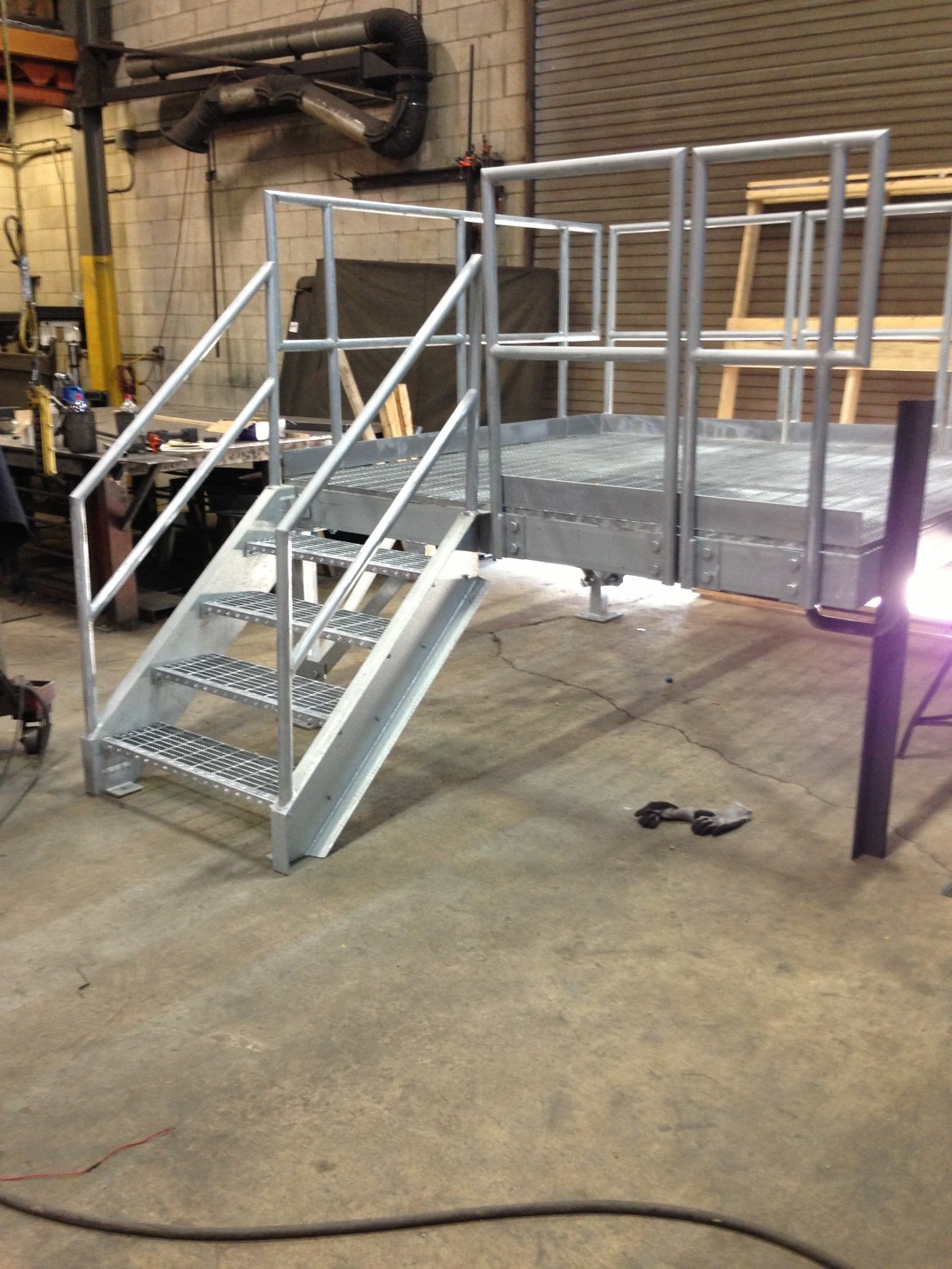
Shop assembled job site stairs

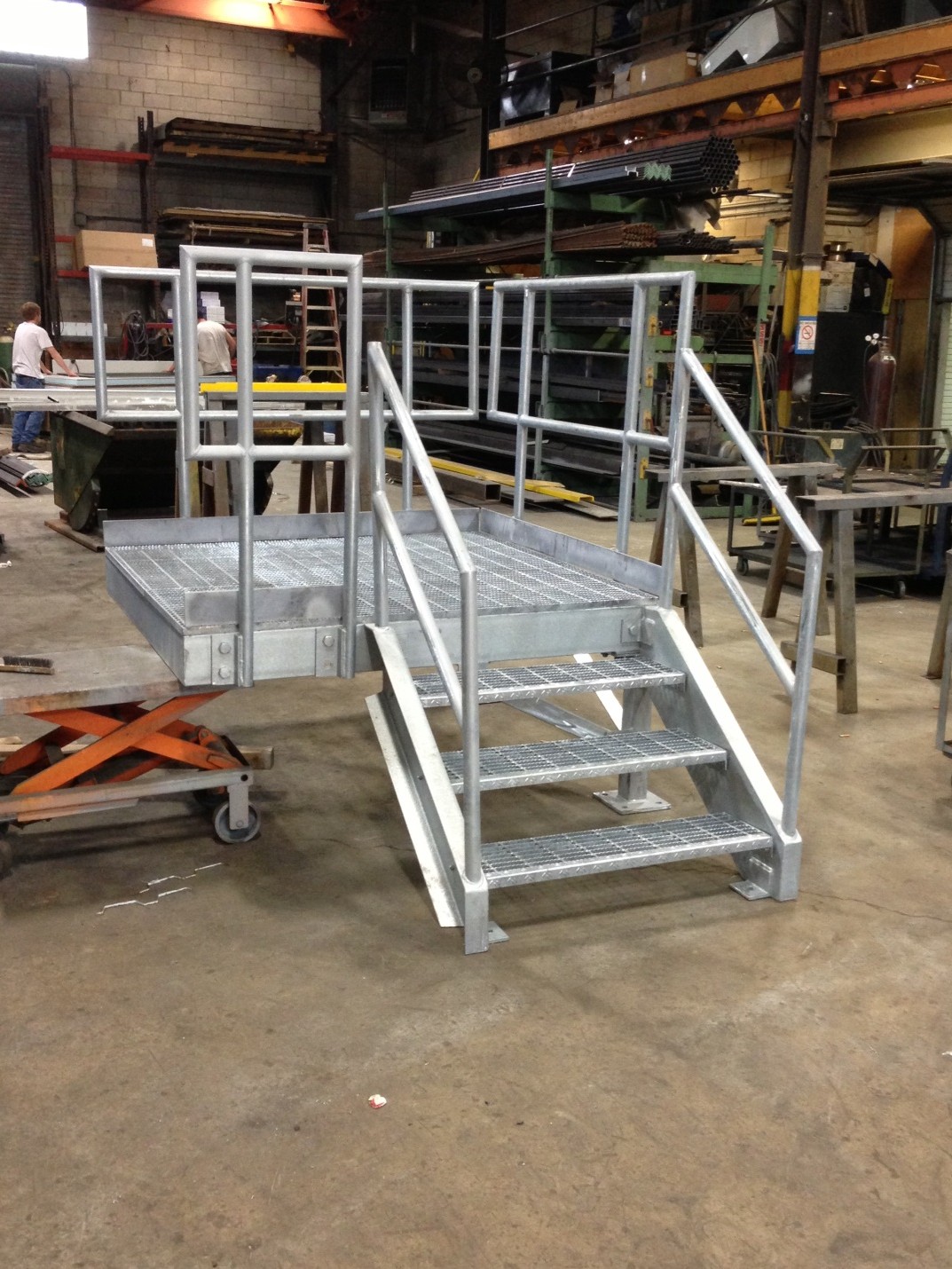
We often get calls to fabricate replacement construction trailer stairs to replace temporary wooden steps. The stairs below were used with job site trailer that housed electrical control modules and needed a safe OSHA compliant means of access from two sides.

removable handrail on metal stairs

Close-up of removable handrail option

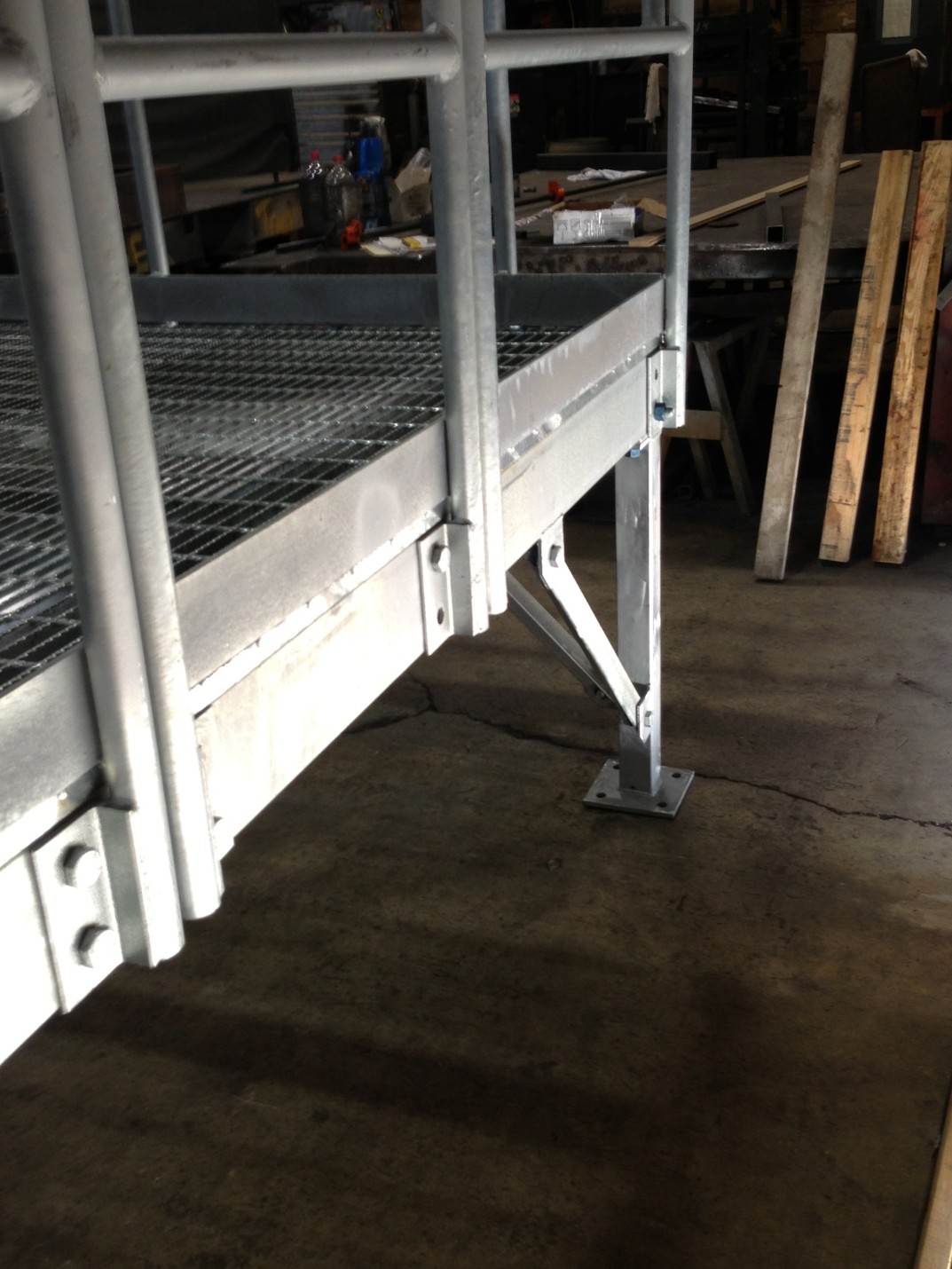
As the construction trailer had some large control modules inside, we supplied stair landings with handrails that can be unbolted, to allow ample access should any module need to be replaced. The stair railings were welded to the stair stringer to maintain a stiff, wobble-free grabbing surface.   In an effort to help keep costs down on the project, the stairs were supplied with two support columns instead of four. This was achieved by bolting the platform edge of the landing to the existing structure, allowing for less steel to be used and a smaller concrete pad to be poured.

stair landing with grating for snow

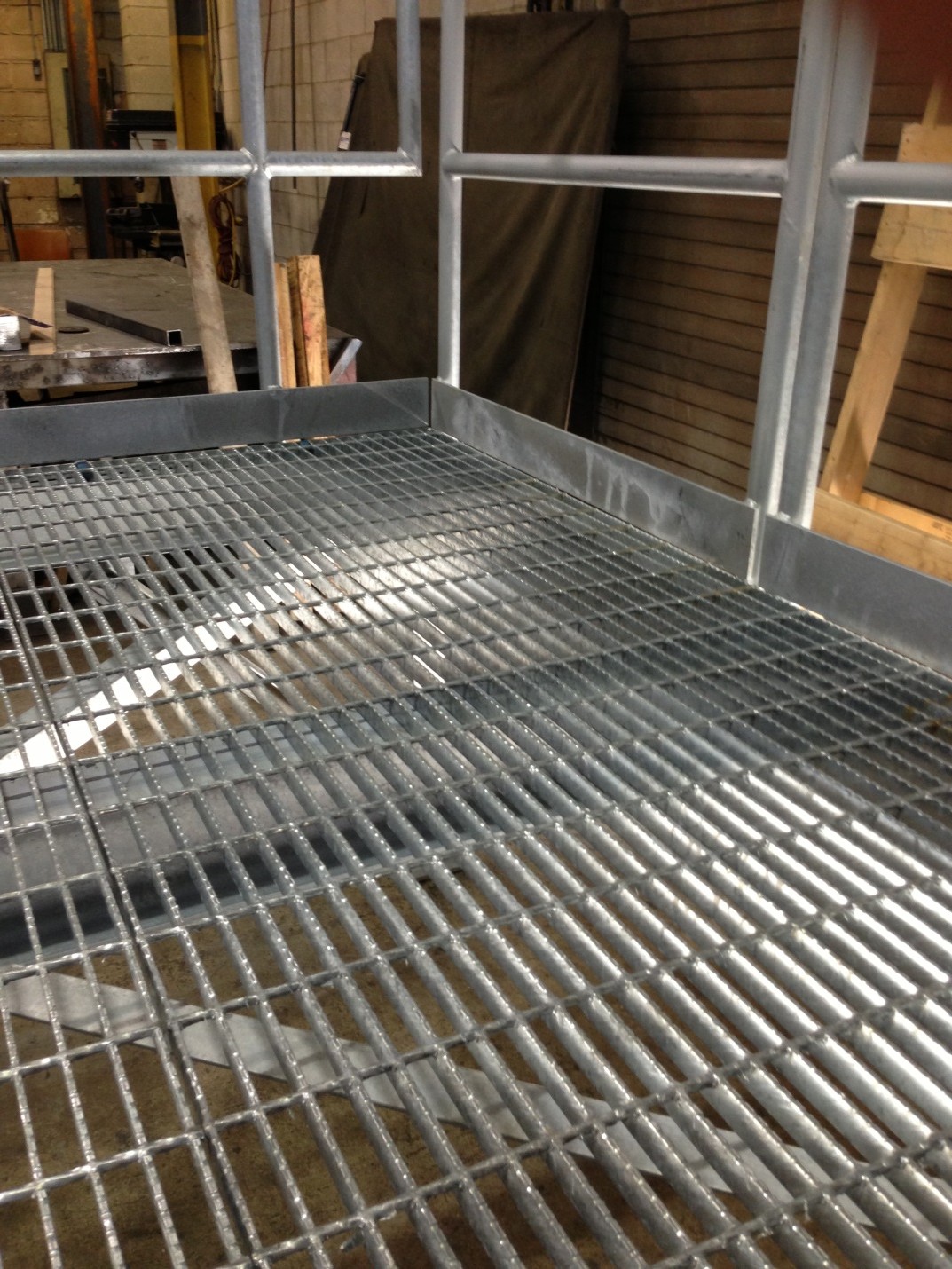
Bar grating decking allows dirt and snow to fall through – allowing for a safe, clear walking surface

Construction trailers are generally located outside in work zones, oftentimes lacking paved access to the doors. With that in mind, the stair treads and stair landing surfaces are most commonly constructed from bar grating. Bar grating is inherently self-cleaning; mud, dirt, rain and snow fall through the treads keeping them cleaner and safer to step on. The landing also has toe kick around the non-entry and exit locations. The 4” high toe guard stops tools and other items from being kicked off the landing. It also serves to stop a slipping foot from falling off the landing, potentially preventing a serious injury and employee downtime.

fully assembled construction trailer stair with galvanized finish for corrosion  protection

Construction trailer stair with a galvanized finish for superior corrosion resistance

As for finish, hot dipped galvanized is one of the best, cost effective finishes to use when the stairs will be exposed to the elements. No chipping, peeling or blistering of the coating will happen. In fact, when the hot dipped galvanized surface is scraped to bare steel, it will ‘self-heal’. The zinc rich galvanized surfaces to the sides of the bare metal will sacrifice themselves to protect the base steel until all of the surrounding zinc is consumed. Hot dipped galvanizing also coats 100% of the structure because it is immersed in the zinc solution, as opposed to being painted on, which can miss hard to reach areas.

Winter Weather Tips

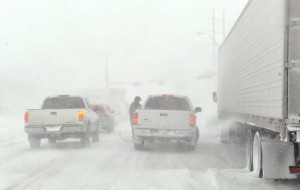
It’s getting colder now and it’s time for some winter weather tips to keep things running smoothly whether you’re at the shop or out on the road.Snow storm traffic jam

  1. Keep a 5 gallon bucket with salt by each of your entrances along with a shovel. Snow and ice buildup can not only make it tough for people to get into your shop, it can also hinder egress in case of an emergency. Be sure to open the emergency doors and shovel/salt around them. Drifts of snow and ice can build up on the outside wall even if there is only a little snow on the ground.
  2. Have entry mats and/or a dry mop by the entrances to your shop. Wet boots trekking in snow can be a dangerous slip hazard.
  3. If you have exterior silcocks (spigots) be sure to remove hoses from them. Even if you have a frost free silcock, it will freeze with the hose attached.
  4. If there is ice on your windshield there is ice on the road. It doesn’t have to be packed up deep to be a problem. Often a thin sheet of ice can cause a big problem, especially when people aren’t expecting it.
  5. Watch the spray from tires – if spray is coming off other vehicles’ tires it’s likely the roads are wet as opposed to being ice covered.
  6. Pack extra supplies. Be sure to bring extra supplies in your truck in case you end up sitting in a back-up, stuck in the snow, wrecked or spun out. Blankets, hats, gloves, wool socks, hand warmers, energy bars, bottled water, a bag of road salt or sand, a small shovel, tow rope, booster cables and emergency flares are a good place to start.
  7. Make an electronics bag for your car. If your job requires using cameras, two way radios, cell phones, laptops or another portable electronic device like a laser level or laser measurer, pack those items all in one bag that you can take to and from your car, along with some extra batteries. Remember, in cold weather batteries are not as productive and electronics can stop working, so it is best to take them indoors with you instead of letting them chill for a prolonged time in an unheated trunk. Packing these items in one bag makes it quick and painless to take them with you.
  8. Stay dry. Whether you are directing traffic, offloading a truck, or maintaining or installing equipment, keeping dry is the first step to preventing frostbite and hypothermia.
  9. Layer properly. Cotton tee shirts offer no insulating value to you when you get it wet, yet many people still wear them as they go off to work outdoors. Natural fibers, wool or silk are amongst the best insulators when damp. There are also many good synthetic materials out that do just as well.  Remember, even if you start off warm and dry, when you work, you sweat, and when you sweat, you get damp, and when you get damp in cotton, you get cold.
  10. When working outdoors, take regular breaks from the cold. Hop in your truck for a warm beverage that you keep in a thermos. This will warm you from the inside out. Same thing goes for eating. Hot soup will warm you up quicker than a brown bagged sandwich.
  11. To help prevent your fuel lines from freezing up, keep your tank at least half full. If the vehicle is going to park for lengthy periods, fill the gas tank beforehand.

Help protect your property from ‘Attractive Nuisance’ instances

By Brett @ A-Mezz

Oftentimes, people are looking for an easier way to access their roof. They may have been using an extension ladder before, renting a bucket lift, or even pulling a truck up to the wall and climbing on the vehicle.  Adding a permanently fixed roof access ladder is a great way to mitigate the cost of renting lift equipment, or increase the safety of the climber compared to using an extension ladder.

Once you’ve installed the permanent access ladder, you need to ensure that you protect yourself from having an “attractive nuisance”, or in other words, an item on your property that can be a magnet to curious kids, while at the same time providing an opportunity to cause them harm.

Generally, attractive nuisance laws start with the understanding that kids are not expected to foresee the danger all situations present. As the property owner, if there is reason to believe kids can access your property, you have a responsibility to prevent causes of potential harm. If the owner does not, the property owner could very well be held responsible for the injury to a child. Keep in mind that in many courts, kids are not just young children, but can very well be teenagers also.

What are ways to mitigate your liability? The easiest way is to be a responsible property owner. Make sure that you are following the local, state and federal laws and safety standards.  Simply do what you can to prevent access to the hazard. Just as you would lock up tanks of propane so they can’t be stolen or so that kids can’t access them, you should do the same with your ladder if it is in an area accessible to kids. A simple lockable door over the rungs of your ladder can help accomplish this. Though it will not stop someone who is determined to gain access to the roof and is willing to ‘spiderman’ up the side, or pull their car up and climb up, it will help lessen your exposure to inquisitive kids, as well as add a deterrent to opportunistic thieves and vandals. Another option, if you have the room, is to fence in the area surrounding the ladder (this also works well at the bottom of stairs accessing roofs). Again, if someone is determined to partake in criminal activities they will find a way to do circumvent whatever you do, but with regards to having an “attractive nuisance” you will have helped alleviate the opportunity for accidents.

OSHA penalties for violations could be increasing

By Brett @ A-Mezz

Let’s dive into a little workplace safety tangent. Earlier this month an article came out of Wyoming pointing that their state legislators may hike the workplace safety penalties for companies found to be in violation of the state’s Occupational Health and Safety Act.

Currently, according to an OSHA.gov publication, OSHA can assess a penalty of $1,500 to $7,000 for a ‘serious violation’. The OSHA definition of a serious violation is one where there is substantial probability that death or serious physical harm could result. This could be a situation that the employer was not even aware failed to meet federal safety standards. We come across this all the time when it comes to fall protection and machine guarding. If your roof hatch is open and employees are doing work in the vicinity, there is an opportunity for serious injury unless you use a roof hatch safety rail. Likewise, fixed ladders that do not have automatically closing ladder gates or offset orientations could also cause serious injury should a fall occur. Shop machines without proper guarding, and in some cases, without electrical interlocks, can also cause serious violations if your employees can gain access to movable parts without the machine shutting down.

OSHA also has a penalty for a “Willful Violation”. This they define as a violation that the employer intentionally and knowingly commits. The employer is aware that a hazardous condition exists, knows that the condition violates a standard or other obligation of the act, and makes no reasonable effort to eliminate it. OSHA can access penalties up to $70,000 for each violation. Knowing that areas lack proper fall protection but choosing not to address the hazard could easily put an employer into this category of violation. Should that violation result in the death of an employee the penalty can be increased up to $250,000 (or $500,000 if the employer is a corporation). Those fines are in addition to any legal amounts the injured or killed party may be awarded.

As Benjamin Franklin once put it, “An ounce of prevention is worth a pound of cure”. Proper safety equipment is MUCH less expensive than ignoring a safety issue and having a costly accident.

Catwalk Access Ladder

fixed access ladder for catwalk use

Uncaged Ladder for Catwalk Access

We supplied the above permanent ladder to a customer who was accessing elevated sections of their presses with catwalk platforms. As the top landings for the presses were infrequently accessed, and floor space was minimal, using a fixed ladder with a walk through handrail was the best solution due to its small footprint, safe access and low cost.

Our standard fixed 8 rung ladders have two pairs of standoff brackets to mount to the wall, but because there was no wall to mount the ladder to in this instance, the installer fabricated custom plates for the wall mount brackets to bolt to. Those custom brackets then mounted to the single C-channel running behind the access ladder.

The ladder was supplied with a walk through handrail that they bolted to the top of their landing. Even though they have OSHA handrail on the catwalk the ladder needed its own walk through rails per OSHA 1910.27(d)(3) which states:

 “The side rails of through or side-step ladder extensions shall extend 3 1/2 feet above parapets and landings. For through ladder extensions, the rungs shall be omitted from the extension and shall have not less than 18 nor more than 24 inches clearance between rails.”

There are two main instances that you would find a ladder without the walk through handrails. The first is when you are stepping off to the side of the access ladder to exit (right or left hand exit). Keep in mind that when doing a side exit off your permanently fixed ladder you will still need to have four additional ladder rungs above the landing surface to meet the 42” extension, you wouldn’t just omit the rungs from the extension. Those additional ladder rungs would be for hand hold only.

The second instance that you would not need a walk through handrail is when the fixed ladder is accessing a manhole or any climbs that terminate with hatches. There is no walk through handrail requirement in OSHA 1910.27 for manholes or hatches, and as such, grab bar devices would be voluntary.  For information on OSHA’s thoughts regarding telescoping ladder posts see the following letter: http://www.ladderhatch.com/osha-roof-hatch-interpretation.htm


Installation of a Parapet Crossover Fixed Ladder

By Brett

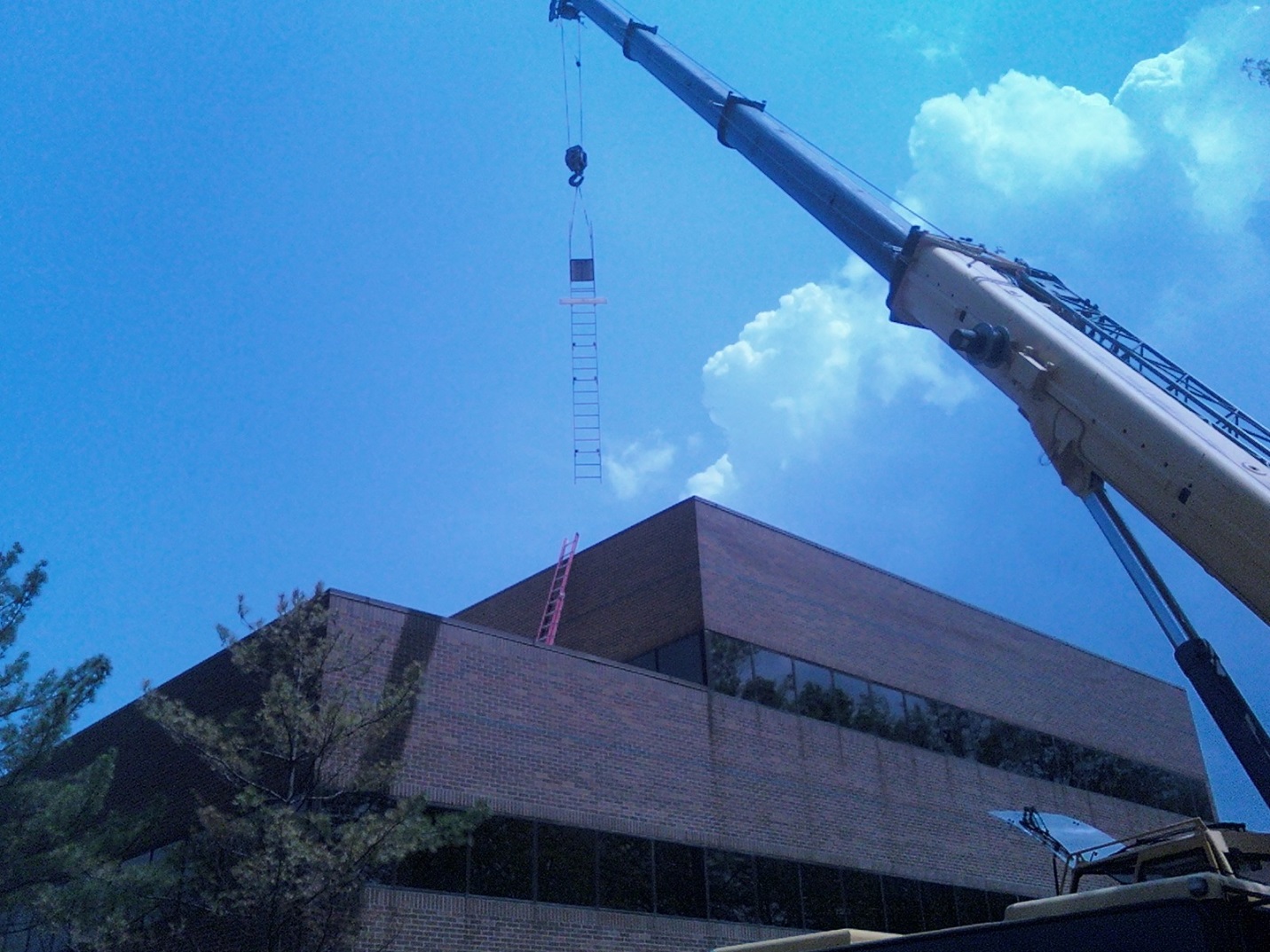
parapet crossover ladder suspended by crane

Installation of parapet crossover fixed ladder by crane

We recently completed fabrication and installation of some hard to reach roof ladders for a customer in northeast Ohio. They were looking to access their upper roof level from their lower roof. Before contacting A-Mezz, if they were on the lower roof and wanted to access the upper roof, they needed to climb back down the roof hatch ladder, walk over to the taller building section and take an elevator to the top floor of that building. They then had to climb back up another ladder through a roof hatch. This was entirely too time consuming and a big efficiency drain.

We arrived on site and after reviewing the site conditions it was decided that an uncaged ladder was the best solution to their roof access problems.

There were a couple of things that we had to work around at the site. The first item we had to work around was that the upper most roof had a parapet wall on top.

According to the ANSI Standard A14.3-2002, the first rung of a climb has to be 14” or less from ground level (floor or roof). As the parapet was over 14” high, a crossover platform was required to allow for rungs on the rear of the parapet.

The second item we had to work around was the row of windows that went around the building. We needed to make sure that the ladder brackets cleared the window span for installation so we made sure to attach directly above and below the windows. The ladder was also painted a brown color to help it blend in with the building, making it less noticeable from the parking lot and street.

Crane lifting fixed ladder for installation

Lifting the fixed ladder into place

The last item we had to work around was the install location. As we were going from one roof to another roof, it was impossible to use lift equipment like scissor lifts and fork lifts to safely get the parapet ladder into place for installation. As the overhead was clear and there was a concrete pad nearby, we brought in a crane for the heavy lifting.

Actual installation time for the parapet crossover ladder was just a couple of hours, but the planning and attention to all the little details on site are what made the process go so smoothly.

Pedestrian Walkway Gate

pedestrian safety gate

MLG gate used as a pedestrian walkway gate

We were contacted by a customer in Texas who wanted to put up some safety gates to alert employees and visitors of their noisy location to the heavy vehicle traffic. They used our MLG ladder gates to accomplish this. The safety swing gates are installed so that the user must pull the gate towards them and then step through the opening. This way they cannot just cross the heavy machinery vehicle traffic without being alerted to the large trucks that constantly pass by.

Our powder coat yellow gate closely matches their existing handrail in both the color and rail dimensions. The gate swings one way, but it can be flipped on the horizontal and vertical axis to achieve a left hand swing, a right hand swing, and a swing in, or swing out.

In this instance the existing handrail was a 1-1/2” sq. tube so they were able to bolt the gate to their handrails using the supplied U-bolts. Installation took about five minutes per safety swing gate.

Why are gates needed in areas like this? Look at the below reminders for pedestrians when around fork lifts and heavy machinery traffic from OSHA’s website :

  • Be aware that lift trucks cannot stop suddenly. They are designed to stop slowly to minimize load damage and maintain stability.
  • Stand clear of lift trucks in operation.
  • Avoid a run-in. The driver’s visibility may be limited due to blind spots.
  • Be aware of the wide rear swing radius.
  • Use pedestrian walkways, or stay to one side of the equipment aisle.
  • Never pass under an elevated load.

OSHA suggests that plant managers separate pedestrians from lift trucks by providing pedestrian walkways with permanent railings or other protective barriers, adequate walking space at least on one side, if pedestrians must use equipment aisles or pedestrian walkway striping on the floor, and/or if barriers cannot be used.

OSHA requires that permanent aisles and passageways be free from obstructions and appropriately marked where mechanical handling equipment is used. [29 CFR 1910.176(a)]

For the above customer, our MLG ladder safety gates helped them meet OSHA standard 29 CFR 1910.176(a) in a cost effective and safe manner.