Author Archives: A-Mezz

Secure Elevated Wire Partition Tool Crib

wire_tool_crib_amezz1

By Brett

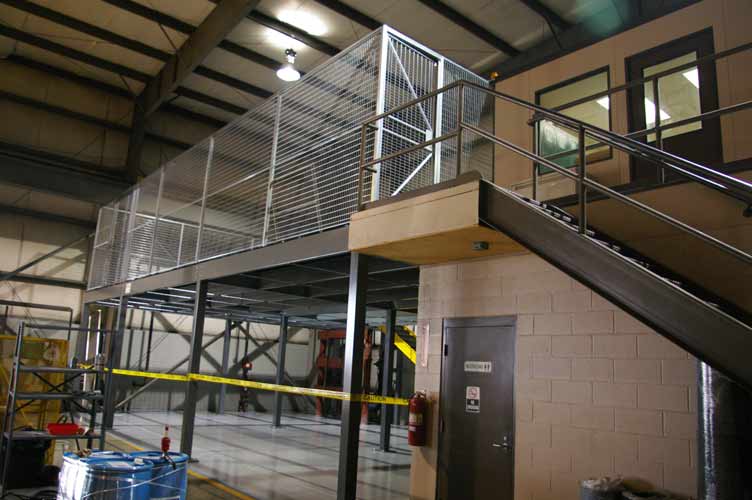
This is a project we completed in NE Ohio. The customer was looking for space for a secure tool crib for maintenance storage as well as the flexibility to store product. As the product was quite heavy, we utilized the ground floor portion for storing those items and used welded galvanized fencing above to secure their maintenance department’s tool storage. The welded wire fencing was selected because of its versatility. Welded wire partition panels have a weld at each intersection of the wire. In contrast, woven wire generally has the individual wires woven and tied off or welded to a fence frame. The welded wire option is great for most jobs because it can be cut to size in the field. If you measure inaccurately, it is not the end of the world because you can trim the extra length off the panels. Likewise, if there is piping or beams running in the way it is easy enough to cut the welded wire fence panel to accommodate the obstruction, while still maintaining the wire partition panel’s integrity.
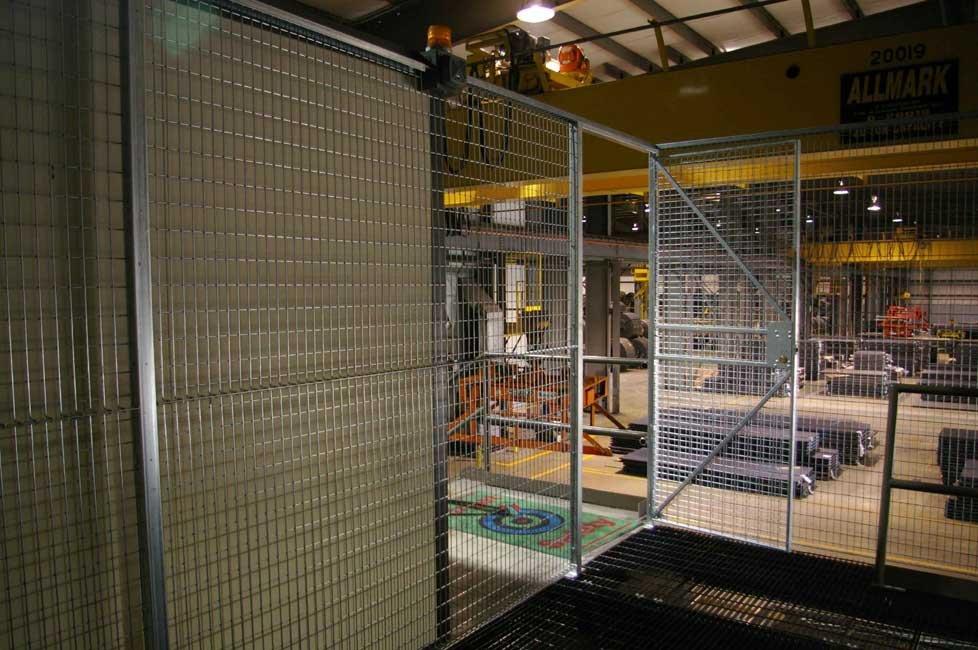
wire_tool_crib_amezz2We utilized the existing stairs and landing from the building adjacent to the new crib in an effort to cut down cost and avoid taking up more room than necessary on their plant floor. The light you see is a reminder light for the operators of the adjacent crane. It reminds them that the mezzanine and tool crib are there so that they don’t bring their load all the way back to the stop and potentially come in contact with the new structure.
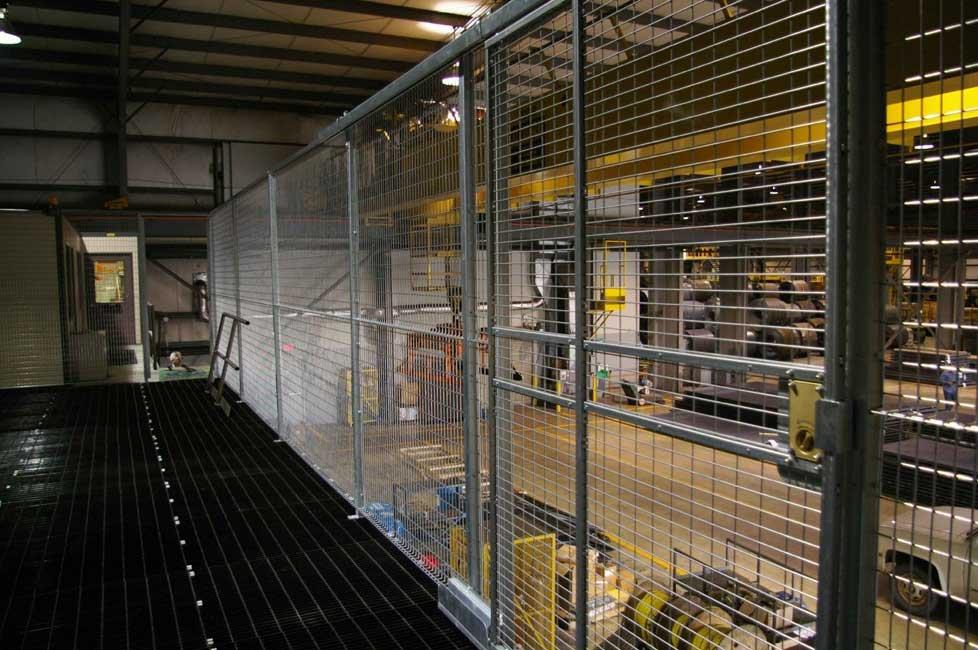
wire_tool_crib_amezz3On the front side of the mezzanine, a sliding door was in place for the occasional pallets of materials for maintenance to offload and store. The customer went with a sliding door because it could be opened, a pallet of material could be set on the top of the mezzanine deck and then the sliding door could be closed while the pallet was offloaded. With a hinged gate they would have needed to pull the pallet away from the opening to close the open fall hazard, but that wasn’t going to be feasible due to the bar grating decking.
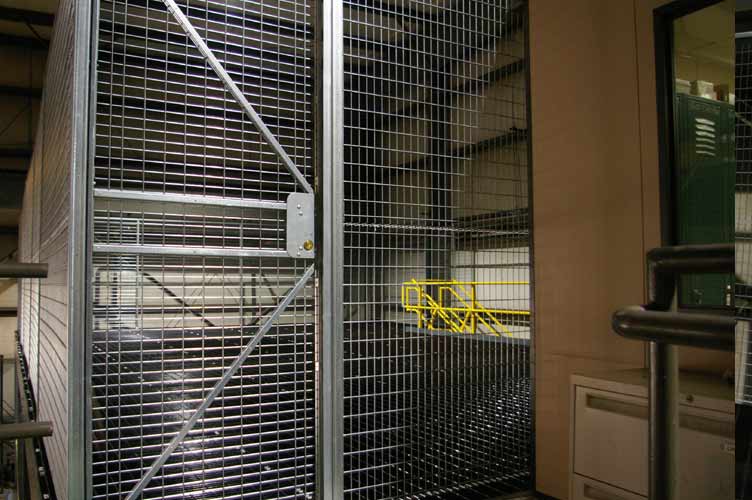
wire_tool_crib_amezz4This customer opted for a simple keyed entry on the hinge door, but they could have used a push button or key card lock with electric strike as well.

Ultimately, they were able to have secure storage for their maintenance department while keeping their product storage below, at a price that fit their budget.
 

Using Crossover Stairs to Maneuver Around Conveyors

By Brett @ A-Mezz

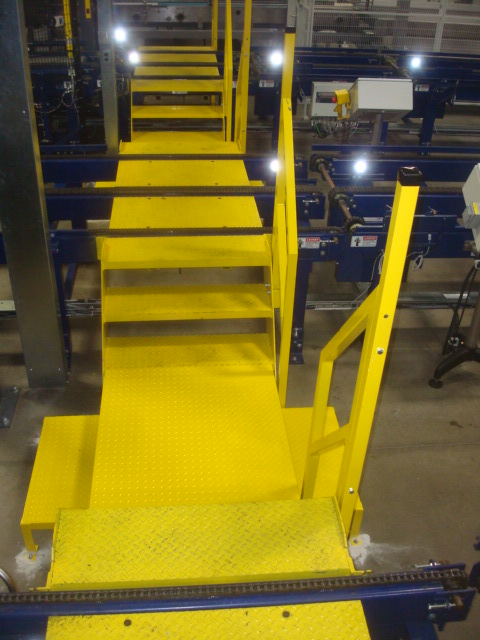
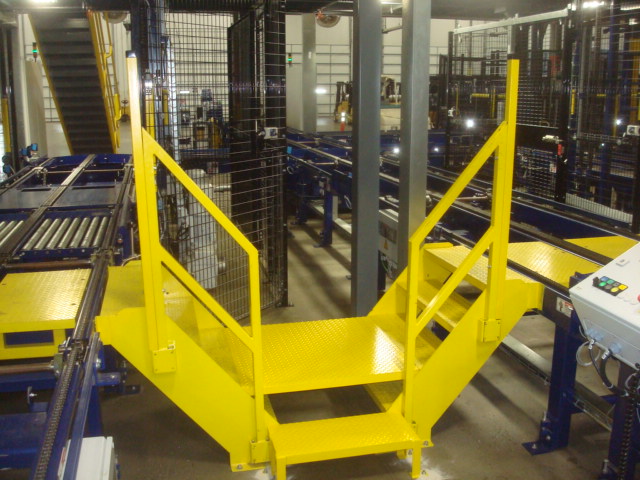
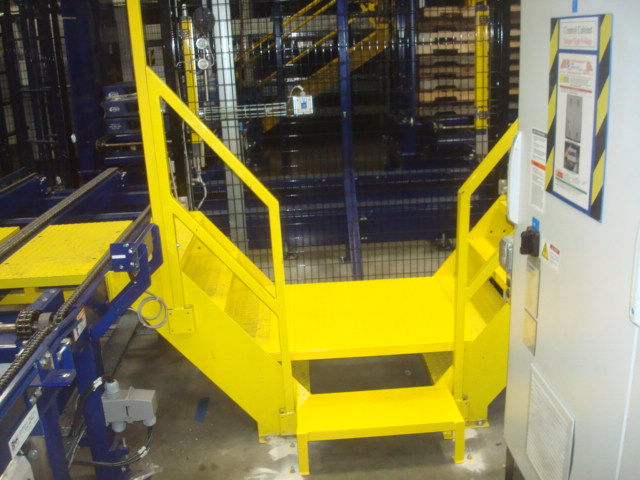
We were contacted by a customer who was DSC03792looking for an easy way to circumvent a winding nest of conveyors so they would not have to serpentine around them, or worse, crawl over/under them. Some customized crossover stairs were just the ticket. We had to ensure that we did not interrupt the flow of traffic on the conveyor and next to the conveyor. Each crossover was fitted with front steps and rear steps when travel beyond the steps was necessary to let their employees have access to all four sides of the crossovers. The important thing was to increase mobility throughout the plant, while not cutting off areas they already had access to.

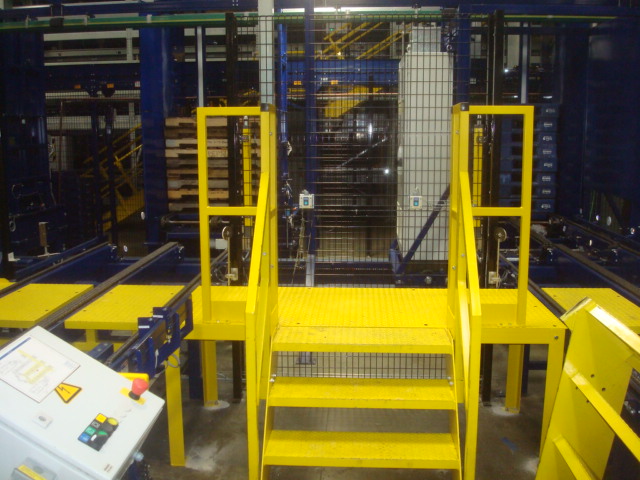
Each stair crossover was fitted with a 34” high DSC03794handrail on one side and had closed diamond plate treads and decking to avoid slips and falls. Each platform was 30” high. Normally we’d just make the crossover level at the top so that you have less up and down when going across the conveyors, but the customer had some obstructions we had to work around. In the foreground of the photos below you can see that there are some control panels and electrical boxes for the conveyors that we had to keep clear. As we go higher with the mid platform we have to go longer with the stairs coming from the front and rear, which would then cause the stairs to interfere with those control panels, so the customer decided that they wanted the mid platform lower.

DSC03793There was also the option to go without the mid platform and the crossover stairs coming from the front and rear of it. That was actually the original design, but their employees did not like having to walk up and down and up and down over and over – especially if they were carrying something with them. The mid platform being installed at a lower height was the compromise with regards to comfort, safety and available space.


The last photo in the set shows a location DSC03795where the stair crossover was actually far enough behind the conveyor control panels to do a conveyor height platform with stairs coming from the front only. All of the crossovers were installed with the ability to be removed without too much difficulty should there be any faulty equipment that needs to be removed for repair or replacement beyond the stair.

Galvanized Ladder Gates for Survey Tower Safety

By Brett @ A-Mezz

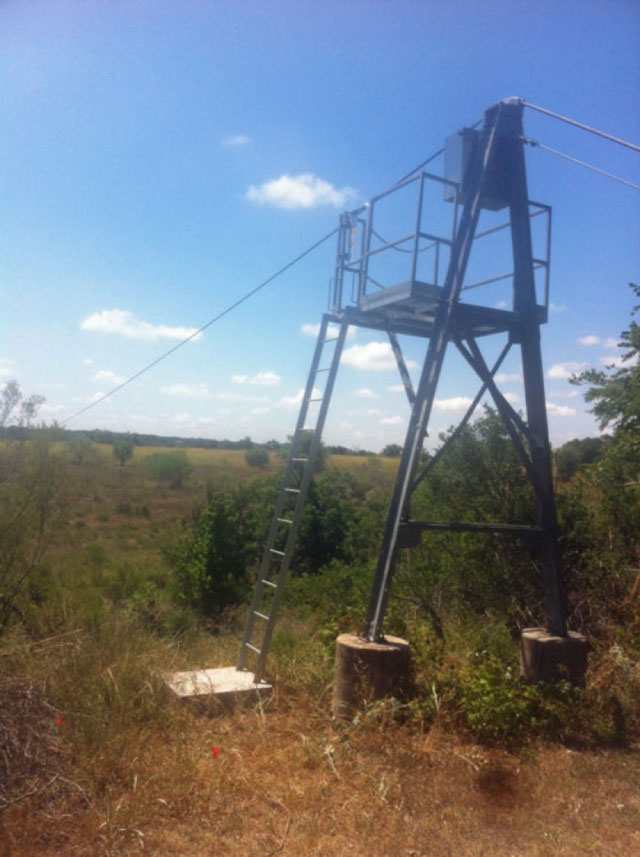
Protecting unguarded railing openings with ladder safety gates on a 12’h survey tower in Texas

Protecting unguarded railing openings with ladder safety gates on a 12’h survey tower in Texas

We received these photos back from a happy customer who contacted us looking for safe platform access by their ladder for a survey tower in San Antonio, Texas. They were accessing the tower shown by a fixed ladder but they did not have any fall protection at the ladder opening which is the OSHA requirement.

(OSHA 1910.23(a)(2):

Every ladderway floor opening or platform shall be guarded by a standard railing with standard toeboard on all exposed sides (except at entrance to opening), with the passage through the railing either provided with a swinging gate or so offset that a person cannot walk directly into the opening.

In other words you have to have a handrail with toeboard on all sides of an elevated structure, but at the ladder opening you have two options. Option #1 is to use a safety gate with top and mid rail but without the 4”high toe guard. This is your most common solution. Option #2 is to have the ladder offset so that you cannot step directly into the opening. This can add much cost to a job as you have to add landing space and railing to achieve the offset install location. As this survey tower was not using an offset landing for the ladder, the gate was this customer’s only option available to comply with OSHA standards.

After showing them several options, they finally decided on the MLG galvanized ladder gates. For something that was going to sit out in the elements and hopefully receive no maintenance, the galvanized gate with stainless steel springs was the best fit. The MLG gate also ended up being more than 20% cheaper than their other options so they saved some money on the project as well.

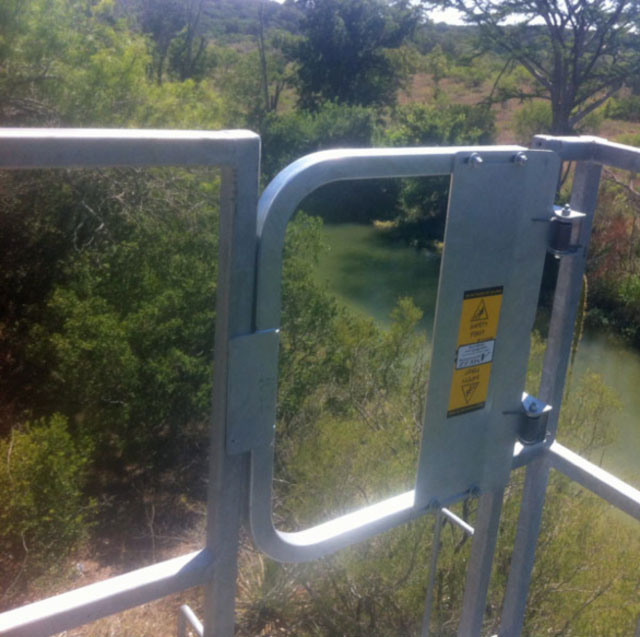
Close up of the galvanized ladder gate

Close up of the galvanized ladder gate

Here you can see a close-up of the ladder gate.  Installation was fast and simple:  flip the gate around to get to the proper orientation, bolt the supplied U bolts around the existing railing, and adjust the length of the gate arm.  Flipping the safety gate allows it to pull people away from the edge of the platform and into the middle.  Installation took about 5 minutes from the time they unboxed the gate to completion, and now when they climb up the ladder they only have to push the gate in with their bodies and step onto the platform.  No more reaching up to unhook chains – which don’t meet OSHA standards at ladder openings – or worrying about staying clear of an unguarded ladder opening.

This customer was so pleased with how our ladder gates worked for their unprotected opening that they called back and ordered more safety gates for another survey tower ladder of theirs.